
7 Steps to Prevent Recurring Sports Injuries With Strength Training
Last Updated: November 2, 2026
Quick Summary
Recurring sports injuries are usually prevented by strength training that builds the muscle, tendon and joint capacity your sport demands, introduced through a seven-step approach. Start by assessing your injury history and pain response, then progress gradually, usually by no more than about 10% per week. Strength training works best when it is scheduled around your sport and recovery, not stacked right before competition.
Review your injury history and track pain from 0 to 10 before, during and after sessions.
Increase weekly training volume by no more than about 10% at a time.
Schedule two in-season strength sessions at least 48 hours apart.
Avoid heavy lower-body work on Thursday or Friday before a Saturday match.
Return to sport based on criteria like full range of motion and strength symmetry, not calendar dates.
Table of Contents
Step 1: Assess Your Injury History and Current Pain Response
Step 2: Build a Base With Controlled Technique and Full Range of Motion
Step 4: Combine Strength Work With Sport Practice and Recovery
Step 5: Rebuild Strength After Injury and Track Your Progress
Booking Your Next Step for a Recovery Assessment at RIGS Brookvale
Why Recurring Sports Injuries Keep Coming Back
Recurring sports injuries are frustrating because they often return to the same spot, weeks or months after you thought you were fine. A hamstring pulls, settles, then tears again the first time you sprint hard. Most of the time, the injury itself was not the real problem. The real problem was what happened afterwards.

Strength training is one of the most useful tools for breaking this cycle. Resistance training builds the muscle, tendon and joint capacity that your sport asks of you. Done well, it reduces the load on tissues that have already been hurt, and it gives them a stronger base to work from.
Our community of local players, runners and weekend footy teams often comes back to one question: how do we stop this happening again? This guide walks through a practical, seven-step approach to answer it.
Keep in mind that this is general information, not individual medical advice. If an injury is painful, swollen or not improving, see a qualified health professional first.
Step 1: Assess Your Injury History and Current Pain Response
Before you load anything, look honestly at your injury history. Write down each injury, the date, the body part, how it happened and how long it took to feel normal again. Patterns usually show up quickly. Maybe every ankle sprain happened on uneven ground, or every hamstring strain came in the last ten minutes of a game.
Next, track your pain response. Pain is a useful signal, but it needs context. A common approach is to rate pain from 0 to 10 before, during and after a session, and to check how you feel the next morning. Mild discomfort that settles within a day is generally manageable. Pain that lingers, sharpens or changes how you move is a reason to scale back and seek advice.
Watch out: Do not push through sharp, catching or locking pain in a joint. That is a sign to stop and get it checked.
Step 2: Build a Base With Controlled Technique and Full Range of Motion
Good technique is the foundation of safe strength training. Start with bodyweight or light loads and focus on controlled movement through the full range of motion your joint allows. A slow, controlled single-leg squat, for example, teaches your knee to track properly and your hip to stabilise under load.
Rigs Brookvale
Many people rush this stage because they want to lift heavier. A better approach is to earn each increase in load by moving well first. Film a set from the side, or work with a coach who can check your alignment, before adding weight.
Use a range you can control from start to finish
Keep the joint aligned over the foot or hand
Pause briefly at the hardest point of each rep
Stop the set when technique starts to break down
Step 3: Apply Progressive Overload for Injury Prevention
Progressive overload means gradually increasing training demand over time. For injury prevention, the increases should be small and deliberate. Tissues adapt to load when it is introduced slowly enough for them to keep up.
A simple method is the 10% guideline, though it is a rough rule rather than a law. Increase weekly training volume by no more than about 10% at a time, and hold the increase for a week before making another. Track sets, reps and load in a notebook or app so changes are visible.
Sudden spikes are the enemy here. Many overuse injuries follow a jump in running distance or lifting volume that the body was not ready for. Steady, planned progression keeps the risk of recurrence lower than bursts of intense training followed by time off.
Step 4: Combine Strength Work With Sport Practice and Recovery
Strength training has to fit around your sport, not compete with it. Establishing this rhythm requires a sustainable approach that makes it easier to stay consistent with training throughout the entire competitive season.

A practical default for in-season athletes is two strength sessions per week, placed at least 48 hours apart and ideally 48 hours before your next match or hardest practice. If you play on Saturday, Tuesday and Wednesday are good strength days. Avoid heavy lower-body work on Thursday or Friday.
Here is a sample weekly template for a field-sport athlete playing one match per week:
Monday: Recovery or light mobility
Tuesday: Strength session A (lower-body focus: squats, hinges, single-leg work)
Wednesday: Sport practice
Thursday: Strength session B (upper body and core, plus light posterior-chain work)
Friday: Rest or very light activation
Saturday: Match
Sunday: Rest
Adjust the days to your actual schedule, but keep the principle: strength work should be separated from high-intensity sport by at least a day where possible, and the heaviest loads should land furthest from competition. (Source: research on the benefits of progressive overload)
Recovery matters just as much as the work itself. Sleep, nutrition and rest days give tissue time to adapt. Athletes in our community who train hard but sleep poorly may find their strength plateaus or their injury history repeats. Aim for seven to nine hours of sleep, and treat rest days as part of the programme, not a sign of weakness.
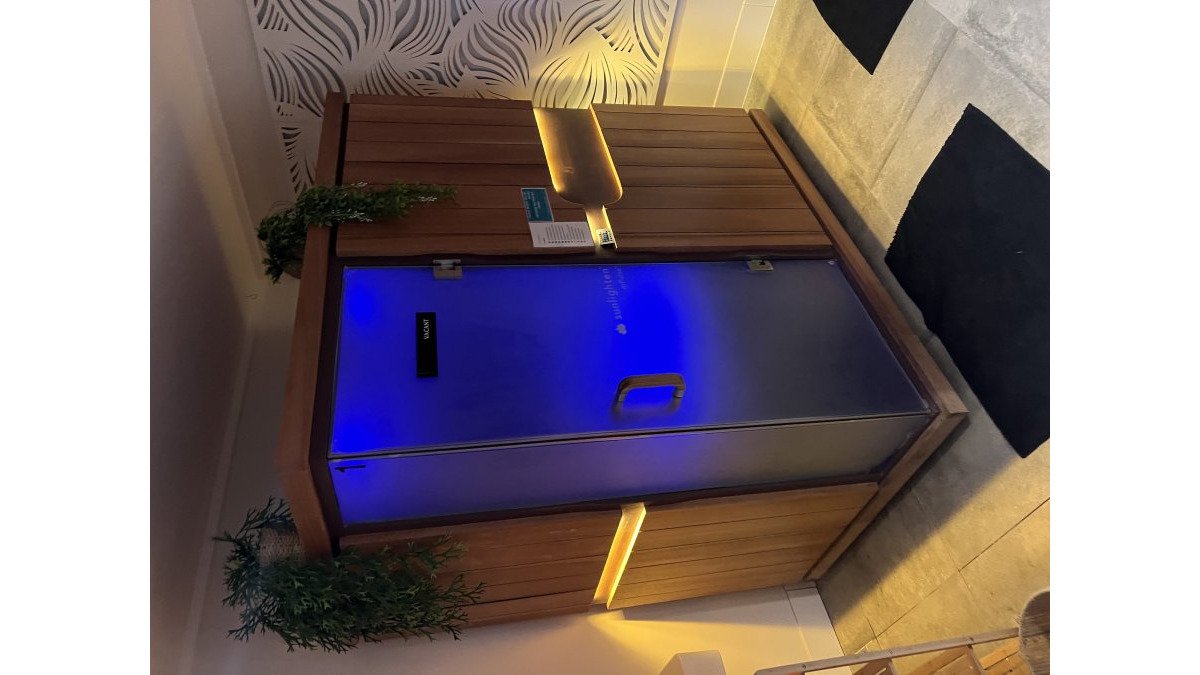
Recovery methods such as contrast water therapy may help some people manage soreness between sessions. Research on these methods is still developing, so treat them as one useful tool among many, not a replacement for good training. If you want to explore recovery options alongside your training, our centre offers contrast water therapy for athletes managing muscle soreness.
Finally, listen to your body. If a strength session leaves you unusually sore for more than 48 hours, or if your sport performance drops, scale back the volume or load. The goal is to build resilience, not to add another source of fatigue.
Here is a quick summary of the weekly strength and sport scheduling rules covered in this step.
Item | Guideline | Note |
Strength sessions per week | Two, in-season | At least 48 hours apart |
Best strength days | Tuesday and Thursday | Before a Saturday match |
Heavy lower-body work | Avoid Thursday or Friday | Keep it furthest from competition |
Sleep target | Seven to nine hours | Supports recovery and adaptation |
Sore for over 48 hours | Scale back volume or load | Sign strength work is adding fatigue |
Step 5: Rebuild Strength After Injury and Track Your Progress
After an injury, rebuilding strength should be gradual and measurable. But generic advice like "start light and progress" is not enough when you are dealing with a recurring problem. Different injuries need different strength emphases, and tracking the right markers tells you whether you are actually ready to return to sport.
Injury-specific programming
Hamstring recurrences: Focus on eccentric hamstring strength (e.g., Nordic curls, Romanian deadlifts) and single-leg bridges. These target the muscle-tendon unit that often fails during sprinting. Start with bodyweight or light resistance and progress slowly.
Knee (patellofemoral or ligament): Prioritise quadriceps and gluteal strength with controlled single-leg squats, step-downs and hip thrusts. Avoid deep knee flexion under load if it provokes pain.
Ankle sprains: Build calf strength (soleus and gastrocnemius) with raises, plus balance and proprioception work on one leg. Progress to hopping and landing drills before returning to cutting sports.
Shoulder (instability or rotator cuff): Use banded external rotations, scapular control exercises and overhead pressing only when pain-free. Overhead athletes may need a longer runway before heavy pressing.
In all cases, start with the exercises your physiotherapist or doctor has cleared, then add load only when movement feels solid and pain stays settled. Rushing the early stages because you feel fine can lead to re-injury when returning to full speed. Patience here pays off.
Tracking progress objectively
Useful markers include single-leg balance time, the number of controlled reps you can do with good form, and how the joint feels the day after a session. But for recurring injuries, also monitor:
Strength symmetry: Compare the injured side to the uninjured side. A common target is within 10% for strength and power measures before returning to sport.
Pain response: Rate pain from 0 to 10 before, during and after activity, and check the next morning. A consistent increase over two sessions is a sign to scale back.
Training load: Track weekly volume and intensity. Sudden spikes are a known risk factor for recurrence.
Functional tests: For lower-body injuries, single-leg hop for distance and landing control are simple, reliable checks. For upper-body, a controlled push-up or overhead reach can reveal deficits.
Compare results every two to four weeks rather than daily. Gains in strength usually build slowly, and that is normal. Keeping a simple logbook or app can help you see progress you might otherwise miss.
Some people find that compression therapy helps with muscle soreness and recovery during this phase. Compression therapy is one option offered at our centre, and it works best alongside, not instead of, a structured rehab plan. If you are unsure whether you are ready to progress, a session with a qualified practitioner can give you clarity and a plan tailored to your injury history.
Step 6: Meet Clear Return-to-Sport Criteria
Returning to sport should depend on criteria, not calendar dates. Before you go back to full training or competition, aim to meet clear checks: pain-free full range of motion, strength on the injured side close to the uninjured side, good control during sport-specific movements such as cutting, jumping or landing, and no swelling after a graded training session.
A common mistake is returning as soon as the pain goes away. Pain relief often comes before the tissue is ready for the load of competition. A staged return, with lighter training first and full contact or match intensity last, lowers the chance of the same injury coming back.
Agree on these criteria with your treating health professional, and be honest with your coach about where you are in the process.
Booking Your Next Step for a Recovery Assessment at RIGS Brookvale
If you are dealing with a recurring injury on the Northern Beaches, you do not have to work out the plan alone. Our team at RIGS Brookvale is here to help you recover, rebuild and get back to the sport you love. Reach out through our contact page to ask questions before you visit, or book your appointment to start your recovery session.
Frequently Asked Questions
Can strength training help prevent recurring sports injuries?
Strength training can reduce injury risk when it is built around your injury history. Research on resistance training shows the strongest benefit comes from gradual, consistent loading rather than occasional heavy sessions. Start with controlled movements that restore full range of motion, then add load as your pain response stays settled. Because every injury history is different, a physiotherapist or exercise professional can help you set a safe starting point and progression.
What strength exercises help reduce the risk of sports injuries?
Exercises that load the muscles and joints involved in your sport usually give the best return. Single-leg work, hip and trunk control, and slow eccentric lowering are common choices because they build stability and force absorption. Choose movements that match your sport's demands and your past injury site. Focus on proper exercise technique before adding weight, and stop any movement that causes sharp or lingering pain. A qualified professional can tailor the selection to you.
How should I return to strength training after a sports injury?
Return to strength training in stages, starting with pain-free, low-load movements and gradually increasing volume and load. Track how you feel the following day, since a flare-up that settles within 24 hours is generally a better sign than one that lingers. Clear return-to-training criteria usually include full range of motion, symmetrical strength and a stable pain response. Speak with your treating clinician before progressing, particularly after surgery or a significant injury.


Comments